
Disclosure : This post may contain affiliate links or paid partnerships. I may earn compensation if you click a link or make a purchase, at no additional cost to you. See my disclosure for more info.
Let’s talk about that corner.
You know the one. It’s been sitting there, bare and a little accusatory, making your otherwise nice living room feel subtly unfinished. You’ve walked past it every single day. You’ve thought about it more than you care to admit.
You tried a plant. You tried ignoring it. You rearranged the furniture twice and the corner still just… sat there.
I’m here to tell you: the answer is a floor lamp. The right one. Not just any floor lamp you grab because it’s on sale, but one chosen deliberately for that specific corner.
And no, more throw pillows on the sofa are not the answer. I love throw pillows as much as the next person, but they can’t fix a corner.
Here are the seven floor lamp styles worth knowing, and how to figure out which one is right for your space.
Why That Corner Keeps Bothering You (There’s a Real Reason)
It’s not just you being fussy. There’s actual design logic behind it.
You put thought into the main parts of the room — found a rug you love, positioned the furniture carefully, maybe even repainted. But the corner got skipped, and now it broadcasts that fact to everyone who walks in.
Here’s what interior designers know that most of us figure out the hard way: corners are where the visual story of a room concludes. When they’re addressed, the whole room feels finished. When they’re bare, the whole room feels like it’s still in progress — even if everything else is great.
Your eye sweeps around the room, looking for somewhere to land, and stumbles when it reaches that empty corner. That stumble is the low-grade discomfort you feel every time you’re in the space.
A floor lamp gives your eye somewhere to rest. It adds height (which every corner needs), warmth (which every room needs more of), and a sense of intention that says: yes, I thought about this space all the way to its edges.
The Trap Most People Fall Into When Shopping for Corner Lamps
Oh, I’ve been there. You see a lamp that looks gorgeous — in a photo, in a showroom, on someone’s Instagram — and you want it immediately.
The problem is that lamp was styled for someone else’s room. Their colors, their furniture, their light. Drop it into a completely different context and it can look totally wrong.
And then there’s scale. A petite, willowy lamp next to a big, deep sectional looks like it’s apologizing for itself. A tall, chunky lamp beside a small armchair looks like it’s about to sit on it. Proportion matters enormously, and it’s easy to misjudge from a product photo.
The rule I’d give a friend: shop for your corner, not for the lamp. Keep the actual space in mind — its dimensions, its furniture, its light quality — and let that guide you. The styles below are all great. But each one is great only when it’s right for the room it’s in.
1. The Arc Floor Lamp: When You Want Drama and Don’t Mind Knowing It
If you want the one lamp style that makes every visitor do a double-take, an arc floor lamp is your answer.
The big curved arm reaches out over the furniture and delivers light from above — basically a chandelier without the ceiling installation. It looks architectural, intentional, and just a little bit glamorous.
Where they work best: behind a sofa or beside a reading nook. The arc creates this lovely enclosed feeling over whatever’s beneath it — like the lamp is wrapping around the seating area.
One thing I always tell people: the arc needs something beneath it. A side table, a reading chair, a spot on the sofa arm. An arc lamp hovering over empty floor space looks dramatic without any purpose — and that’s not the same as looking good.
They love low-profile, modern furniture — minimalist sofas, streamlined mid-century pieces. And one practical thing: check that the base is heavy. These lamps need substantial bases to stay upright, which matters a lot if you have kids or pets at home.
2. The Tripod Floor Lamp: Design Credibility for Every Room Style
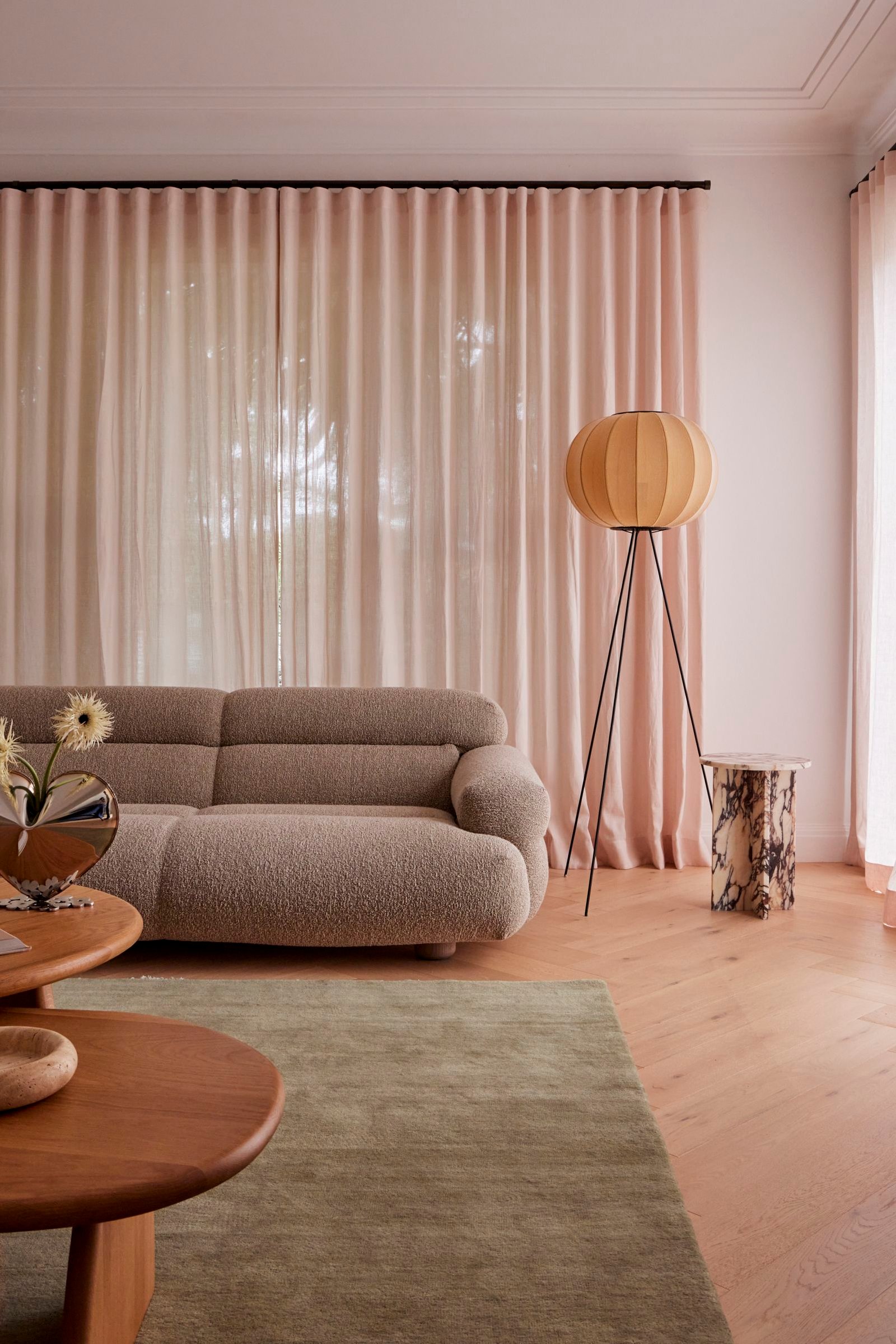
If I had to recommend one style of floor lamp to work in the most different kinds of rooms, it would be a tripod lamp.
The three-legged structure has this quality of looking purposeful and artistic without screaming for attention. It just… makes a corner look like someone thought about it, without being precious about it.
Warm wood legs read beautifully in Scandinavian, bohemian, and earthy rooms. Metal legs (brushed nickel, matte black, brass) work in industrial, contemporary, or glam-modern spaces.
And the thing I appreciate most about tripod lamps: they stand on their own. You don’t need a side table or a curated stack of books beside them. They look complete by themselves, which is genuinely rare.
My placement tip: point one leg toward the wall and two toward the room. Sounds tiny but it makes the lamp look much more grounded and intentional than having all three legs parallel to the baseboard.
3. The Torchiere: The Room-Brightener That Changes Everything
This is the style I recommend when someone tells me their room always feels darker and gloomier than they want, no matter what they do.
A torchiere sends its light upward instead of downward. The ceiling catches it and bounces it back into the whole room as a soft, even ambient glow. It genuinely mimics overhead lighting — without any wiring or installation.
If your room has no ceiling fixture, or you live somewhere with ceilings that feel lower than you’d like, this lamp is a game-changer. And modern ones come with dimmable LED settings, so you can have bright and energizing during the day and soft and cozy at night from the same lamp.
The one thing to know: this style depends on ceiling color. A white or light ceiling reflects the light beautifully — you get maximum effect. A dark ceiling absorbs it and the lamp loses most of its magic. Know your ceiling before you buy one.
4. The Pharmacy Floor Lamp: Quietly Brilliant, Criminally Underrated
Nobody talks about pharmacy lamps enough. I’m going to fix that.
A pharmacy lamp (sometimes called a task lamp) has an articulating arm and a shade you can point exactly where you need it. Originally designed for clinical use — think old-school doctor’s offices — but they’ve become a staple in well-designed reading corners and home studies.
If your corner sits beside a chair where you read, do puzzles, sketch, or work, a pharmacy lamp delivers precise, directional light without bathing the whole room in brightness. It’s focused and functional and looks so purposeful that even basic furniture around it starts to look intentional.
Slim, tidy footprint too — one of the narrowest of any floor lamp style.
How to style it: give the lamp something to illuminate. A side table, a stack of books, a reading chair with an open novel on it. The lamp is built around purpose, so giving it visible purpose makes the whole corner read as genuinely thought-out.
5. The Statement Sculptural Lamp: When You Want Art That Glows
Not every corner needs more light. Some corners just need something worth looking at.
Sculptural floor lamps are pieces where the form is the whole point. Unusual shapes, interesting materials, silhouettes that look like they belong in a gallery. The illumination they produce is basically a bonus — the lamp itself is the statement.
They’re the pieces that make guests stop mid-conversation and ask where you found it.
One honest word of caution: sculptural lamps need restraint around them. Bold shape is enough. Bold shape plus bold material plus bold color is too much — the corner starts to feel like an experiment that got away from you. Pick one element to be interesting and let everything else be quiet.
6. The Shelf Floor Lamp: For When You Need Light AND a Place to Put Things
This one is for anyone who has an empty corner and a books-and-plants-and-small-objects situation with nowhere to put everything.
A shelf floor lamp combines a light source with built-in display shelves along the column. You get illumination and display space in a single narrow footprint. In smaller apartments or rooms where floor space genuinely counts, this is a very smart solution.
A few books here, a small succulent there, a framed photo at the base — the corner becomes a layered little vignette with personality.
The rule that makes it work: don’t fill every shelf. Leave one empty, minimum. A totally loaded shelf lamp looks like a crammed bookcase. A selectively styled one looks like a thoughtful corner installation. You want people to think “how charming,” not “where do I look first.”
7. The Rattan or Woven Floor Lamp: Nature Called, and So Did Your Living Room
If your room already leans natural — wood furniture, linen cushions, earthy tones, maybe a macrame somewhere — a rattan or woven lamp is genuinely the most at-home choice.
When you turn it on, the woven shade casts the most gorgeous dappled light across the walls — warm, patterned, a little bit hypnotic. It’s one of those light effects that photographs terribly and looks incredible in person.
Fair warning though: this is a mood lamp, not a task lamp. The diffused light is atmospheric and beautiful but not bright enough for reading or close work. Know what you need the corner to do before committing.
Pair it with a floor cushion and a low wicker basket nearby and the corner becomes the most inviting spot in the whole room. Genuinely.
How to Pick the Right One Without Overthinking It
Before you start clicking, ask yourself four questions. Seriously — they take five minutes and save you from a frustrating return:
What does the corner need to do? Provide task light for reading? Fill the room with ambient warmth? Just look like something intentional is happening there? Your answer is your first filter.
How high is the ceiling? Taller ceilings are friends of arc lamps and torchieres. Average or lower ceilings work better with pharmacy lamps and mid-height tripods that don’t fight the ceiling line.
What does the rest of the room look like? Wood tones, earthy colors, natural textiles? Your lamp should feel like it belongs in the same family. Clean lines and cool tones? Match that energy. The lamp can be a deliberate contrast, but it should never feel like it wandered in from a different room by accident.
How much floor space do you actually have? Measure the corner before you shop. Arc lamps and tripods need room to breathe. Pharmacy lamps and shelf lamps can work in much tighter footprints.
The Lighting Trick That Makes Everything Look Better
Here’s a freebie that professional designers use constantly and almost nobody does at home.
Layer your light sources at different heights.
A floor lamp alone in a room looks like you started decorating and stopped. That same floor lamp paired with a table lamp across the room — plus candles or low-level lighting nearby — looks like someone actually designed the space.
The floor lamp sits at the top of the light composition. Table lamp in the middle. Candles low. Three heights, three sources, and suddenly the room has depth and warmth that a single overhead light can never match.
Your corner lamp anchors the whole scheme. Everything else builds around it.
Okay, It’s Time
That corner has had enough time to sit around feeling sorry for itself.
You don’t need a renovation or a designer or a month of scrolling. You need one good floor lamp that fits the scale, the style, and the function of your specific corner.
Pick the style that matches your room. Measure the space. Be honest about whether you need task light, ambient warmth, or just a good-looking something in that corner.
Then place it — and notice what happens to the whole room.
Because here’s the thing: a well-chosen floor lamp doesn’t just fix a corner.
It finishes a room.
And once it does, you’ll be a little embarrassed it took this long. (No judgment — I’ve been there too.)
Go light that corner up.