
Disclosure : This post may contain affiliate links or paid partnerships. I may earn compensation if you click a link or make a purchase, at no additional cost to you. See my disclosure for more info.
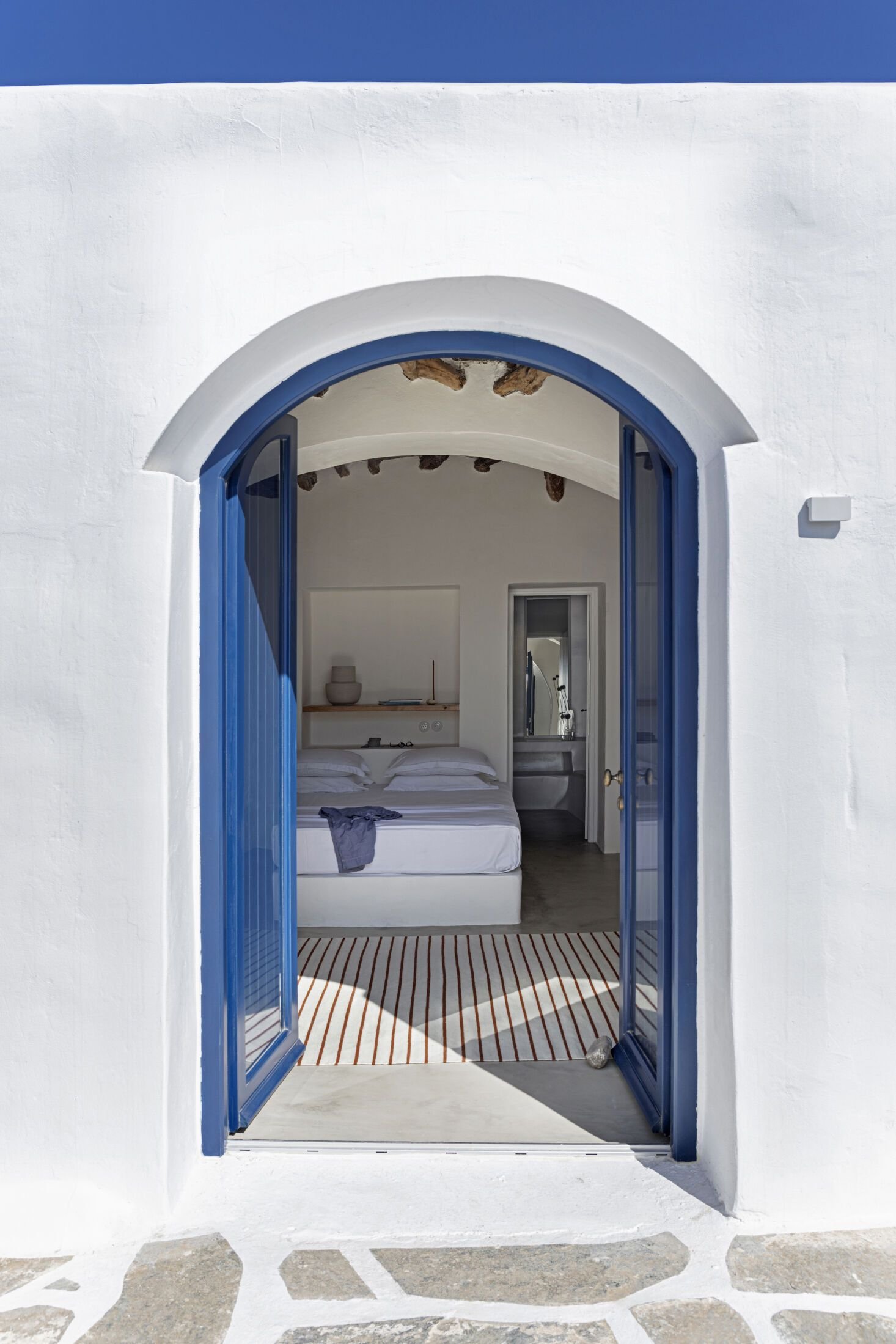
The Mediterranean bedroom is not a style in the conventional sense.
It is an atmosphere. A feeling. A room that earns the description “restful” without trying too hard.
And that atmosphere is built from specific, identifiable choices — in the architecture, the palette, the materials, and the way objects are arranged.
This guide covers all of them. 25 Mediterranean bedroom ideas that move from structure to finish, from large-scale decisions to final details, giving you everything you need to build a bedroom that genuinely feels like it belongs somewhere warm and beautiful.
Starting With Structure: Walls, Floors, and Form
Good decorating starts with good bones. Before any textile, accessory, or lamp makes its way into your room, the structural elements — walls, floors, headboard — need to establish the right foundation.
1. Apply warm, matte paint or a plaster-texture finish to the walls
Cold white walls are not a Mediterranean trait. Mediterranean walls are warm — cream, ivory, or warm off-white — and their finish is matte or flat, not reflective.
For a more distinctive result, limewash paint creates the textured, slightly uneven surface of a sun-exposed coastal home. Applied in layers, it gives the wall depth and warmth that flat paint cannot achieve.
2. Introduce terracotta or natural stone to the floor
From the hillside towns of Andalusia to the island homes of the Aegean, terracotta tile is the most recognizable flooring of the Mediterranean world.
Where a full floor replacement is off the table, peel-and-stick terracotta-look tiles are a practical substitute. A natural jute or sisal rug over the top adds softness and keeps the sensory language of the floor natural and warm.
3. Bring in an arched headboard as the room’s architectural centerpiece
The arch is the defining architectural element of Mediterranean building. It appears everywhere: gateways, windows, garden walls, intimate courtyards.
An arched upholstered headboard in natural fabric places that element at the visual center of the bedroom. It creates a focal point on the bed wall and anchors the room’s aesthetic in something structurally meaningful.
Color: Building the Right Palette From the Ground Up
The single most common error in Mediterranean-inspired bedrooms is treating blue as the dominant color.
It is not. It is an accent. And understanding this distinction changes everything.
4. Start the palette with warm earthy neutrals
Sand. Warm beige. Pale clay. Dry linen.
These are the colors that form the visual majority of the room. They are the colors of the stone, the soil, the hillsides — the land, not the sea.
5. Add blue in precise, limited amounts
A pair of indigo linen pillowcases. A ceramic blue vase on the bedside. A hand-painted tile or decorative ceramic piece in cobalt.
Two or three blue elements against a predominantly warm neutral background. Each one becomes a visual event rather than background noise.
6. Bring warmth with terracotta and rust accents
A terracotta plant pot on the windowsill. A rust-colored throw blanket draped at the foot of the bed. A terracotta-toned pillow.
These tones reference the sun-baked clay of Mediterranean building materials — the pottery, the roof tiles, the earthenware vessels that have defined domestic life in the region for millennia.
7. Honor the green of the Mediterranean landscape
Olive. Sage. Wild herb. Fig leaf.
The Mediterranean is not all blue and gold — it is deeply, persistently green. sage green linen curtains hanging in front of a bright window. A rosemary plant. Eucalyptus stems in a rough-textured vase. Green is the color of life in this context, and the bedroom is better for having it.
Textiles: Natural, Layered, and Deliberately Imperfect
The tactile dimension of a bedroom — how it feels to be in it, to touch it, to sleep in it — is determined almost entirely by textile choices.
In a Mediterranean bedroom, the guiding principles are simple: natural fibers, casual layering, and nothing synthetic.
8. Use linen for all bedding
Linen is the textile identity of the Mediterranean. It has been used in coastal homes for centuries because it works: it breathes through summer heat, softens with repeated washing, and develops an organic beauty that grows rather than fades.
Natural, undyed linen — or soft warm tones like oatmeal and pale sand — sets the tone for the entire room’s material story.
9. Layer a loosely draped throw
The objective here is not arrangement. It is character.
A hand-loomed Turkish cotton throw placed loosely at the foot of the bed looks effortless because it is. It adds texture and color while communicating that the room is lived in, not staged.
10. Hang curtains that let light and air through
The curtains in a Mediterranean bedroom are translucent, not opaque. They filter and soften light rather than blocking it.
Sheer white linen panels hung long and wide allow the room to breathe. On a warm morning, with a window open, they move gently — and that movement is as much a part of the aesthetic as any object in the room.
11. Lay a natural or flat-weave rug on the floor
Jute. Sisal. A flat kilim in faded, earthen tones.
Plush, synthetic rugs are incompatible with Mediterranean interiors. The floor should feel natural, slightly rough, and warm — honest material, not cushioning luxury.
A vintage-style kilim rug in traditional warm patterns brings character and depth to the floor without competing with anything else in the room.
Furniture: The Art of Looking Gathered
Mediterranean furniture does not arrive in sets. It accumulates.
A bed inherited from a family member. A nightstand found in a market. A dresser from a different decade than everything else.
That accumulation — the sense that a room has been lived in over time — is precisely what makes these spaces feel so genuine.
12. Anchor the room with honest solid wood
Oak. Walnut. Reclaimed pine. Whatever the species, what matters is that the material is visible, warm, and undecorated.
A low-profile platform bed frame with clean proportions lets the wood do the talking. No lacquer. No veneer. Just the grain and the warmth of the material itself.
13. Bring rattan to the bedside
This swap — trading a standard nightstand for a rattan alternative — is among the most impactful single changes on this list.
Rattan is instantly coastal and warm. A rounded rattan side table or a woven stool used as a nightstand transforms the character of the bedside area in an afternoon.
14. Add a rustic wooden piece at the foot of the bed
Weathered. Worn. Bearing the marks of previous use.
A bench or stool at the foot of the bed that looks like it has a past gives the room its most important quality: the sense that someone has actually lived here for a while.
15. Match nothing deliberately
Not as an afterthought. As a choice.
The nightstands complement each other but are not identical. The dresser is from a different era than the bed. The materials speak to each other rather than repeat each other.
This is the style. The variety is the point.
Accessories: Choosing What Earns Its Place
The final layer of a Mediterranean bedroom is the one that demands the most discipline.
More is not better. Better is better. Every object in the room should be there because it adds something specific — warmth, beauty, usefulness — rather than because there was room for it.
16. Select one round organic mirror for the wall
A round mirror in rattan, driftwood, or carved natural wood. One. On a prominent wall.
It adds warmth. It bounces light. It replaces the generic rectangular mirror that exists in most bedrooms as a default rather than a decision.
17. Display two or three pieces of handmade ceramic
A hand-thrown vase. A pottery bowl for small items. A rough-glazed candle holder.
The imperfections in these objects — the uneven rim, the variation in glaze — are what make them Mediterranean in character. Imperfection is not a flaw here. It is authenticity.
18. Compose a minimal wall arrangement
Two pieces. Possibly three. A botanical illustration. A small coastal image. A simple abstract print.
Framed plainly. Spaced generously. The wall around the art is part of the composition — leave it room to breathe.
19. Use botanicals to bring the outside in
Dried lavender. Rosemary in a terracotta pot. Eucalyptus stems. Dried olive branches in a tall vase.
This is Mediterranean living distilled: the barrier between the room and the natural world becomes porous. The room smells like the landscape it references. It feels alive rather than styled.
20. Add iron or brass details in small, specific doses
A wrought iron curtain rod. Brass drawer pulls on a drawer. An antique brass table lamp warming the nightstand.
One or two metallic accents. They carry craft, age, and warmth without demanding attention.
Lighting: Atmosphere Over Illumination
In a Mediterranean bedroom, lighting is not about seeing. It is about feeling.
The room after dark should feel warm, intimate, and completely unlike a workspace.
21. Switch from overhead to layered soft lighting
Two warm bedside lamps. A wall sconce positioned at a human scale on the wall.
Look for lamps with ceramic, linen, or rattan elements. The material of the fixture contributes to the atmosphere as much as the light it produces. Warm-toned bulbs throughout.
22. Make candles part of the bedtime ritual
A thick pillar candle on a terracotta plate. A beeswax taper in a brass holder.
Lighting a candle when you get into bed is an act of deliberate slowing-down. It is the simplest and most effective tool for changing how a room feels at night. No dimmer switch, no smart bulb, no string lights comes close to what actual fire accomplishes.
23. Let the morning light in fully
Every morning, open the curtains as wide as they go. If privacy is required, sheers provide it without sacrificing the light that warms the room and energizes its palette.
Mediterranean interiors are built around natural light. Block it and you remove the room’s most powerful design element.
The Last Details: What Completes the Room
Two final ideas. Often the last to be considered, and among the most powerful in their effect.
24. Design the scent of the room
A diffuser running rosemary, bergamot, or lavender. A linen spray misted over the pillows. Dried citrus peel in a small dish on the dresser.
Scent reaches the emotional brain faster than any visual input. The Mediterranean smells like something specific and beautiful. Bringing that scent into the bedroom changes the experience of the room in a way that rearranging objects simply cannot.
25. Clear the nightstand to its functional minimum
Lamp. Book. Water. One small beautiful thing.
No clutter. No accumulated objects that were once put there temporarily.
Mediterranean simplicity is not aesthetic minimalism. It is purposeful editing — the removal of everything that does not contribute, so that what remains can be fully appreciated.
The Bedroom You’ve Been Imagining Is Closer Than You Think
Not across an ocean. Not behind a renovation budget. Not somewhere waiting for a different version of your life.
Right here. Built from three good decisions made today, and three more made next month.
The linen sheets and the warm lamps and the arched headboard. Or the limewash paint and the rattan nightstand and the dried lavender on the windowsill.
Start anywhere. Commit to it.
The room builds itself from a beginning. Give it one.
🔍 Focus Keyphrase: Mediterranean bedroom ideas
📌 SEO Title (< 60 chars): 25 Mediterranean Bedroom Ideas for a Coastal Escape
🔗 Slug (< 60 chars): mediterranean-bedroom-ideas
📝 Meta Description (< 155 chars): Discover 25 stunning Mediterranean bedroom ideas to create a warm, coastal retreat. Start transforming your space today with these actionable tips.