
Disclosure : This post may contain affiliate links or paid partnerships. I may earn compensation if you click a link or make a purchase, at no additional cost to you. See my disclosure for more info.
Let’s talk about what’s really going on.
You’ve been walking into your living room and feeling a low hum of dissatisfaction. Not dramatic. Just persistent.
The sectional is there. You haven’t done anything obviously wrong. But the room doesn’t feel like the rooms you admire. It feels more like furniture in a space than a designed living room.
You’ve bookmarked the beautiful rooms. Analyzed the photos. Tried to figure out what they have that yours doesn’t.
Here’s the thing nobody is telling you clearly enough.
The sofa itself isn’t responsible. The budget isn’t either.
It’s the choices layered around that sectional — from how you position it in the room to the small finishing decisions that signal design fluency — that produce the difference between beautiful and merely functional.
Those choices, step by step, are what we’re going to cover now.
The One Thing That Controls Your Entire Living Room
Anchor yourself with this truth before anything else.
The sectional is the primary organizing force in your living room. Scale, color, proportion, placement — every other decision defers to it.
Treat it as the starting point and center of gravity it actually is, and the room begins to compose itself around it.
Treat it as just another piece, and even the best-chosen throw pillows won’t save the room from feeling incoherent.
Placement Strategies for Rooms That Frustrate You
1. Move It Away From the Wall
The single most universal decorating error: pushing the sectional flush against the wall. The result is a room that feels like a waiting room or a lobby.
Even just 8 to 12 inches of clearance behind the sofa adds depth and makes the room feel considerably more spacious.
2. Use the L-Shape to Define Space
An L-shaped sectional is an organic room divider. Use the longer arm to clearly delineate the living area from dining or entry zones.
No partition walls. No structural changes. The furniture establishes the boundary.
3. Aim the Seating at the Room’s Focal Element
Whether it’s a fireplace, a television, or a stunning view, the sectional should face it directly.
The pull toward aiming seating at the front door is deeply habitual. Override it consciously. Your living room is for living, not greeting.
4. Angle the Sectional in a Square Room
Square rooms feel boxy and overly symmetrical when furniture is placed parallel to the walls.
A gentle diagonal angle on the sectional introduces visual tension and energy that makes the room feel more considered.
5. Define a Zone in an Open-Plan Space
In a large open-plan room, the sectional needs to create its own zone rather than float in the middle of everything.
Corner positioning with a round coffee table anchors a clear seating area and creates a sense of intimate structure within a broad, open floor.
Making Smaller Rooms Look and Feel Larger
6. Prioritize a Reversible Sectional Design
In rooms under 250 square feet, a sectional with a reversible chaise is a thoughtful investment. Change the layout as your needs shift rather than being locked into one configuration.
In tight spaces, options are worth as much as square footage.
7. Eliminate an Arm at One End
An armless end removes a visual obstruction. The eye moves further across the room, creating a perception of greater width and openness.
Designers rely on this trick regularly for good reason.
8. Let the Floor Show Beneath the Sofa
Raised legs on a sectional allow light to travel under the piece. That continuation of floor plane across the room makes the space feel larger and less visually enclosed.
9. Match the Sofa Tone to the Walls
A sectional whose color harmonizes with the wall behind it visually merges into the backdrop. In a small room, this reduces visual noise and makes the space feel more open.
Soft warm white sofa against soft warm white walls creates an expansive, serene effect.
10. Replace a Large Coffee Table With Scaled-Down Pieces
A standard coffee table in front of a sectional in a compact room immediately feels overcrowded.
Nesting tables or C-tables give you surfaces where you need them without blocking movement or consuming the floor space you rely on.
Styling Decisions That Make the Whole Room Click
11. Match the Rug to the Sectional’s Scale
Your rug must be large enough that every front leg of the sectional rests on it.
An undersized rug under a large sofa is the kind of mistake that registers immediately — even when someone can’t articulate what’s wrong. Don’t let it undermine an otherwise strong room.
12. Three or Five Pillows, Never Four or Six
Odd numbers feel natural and dynamic. Even numbers feel stiff.
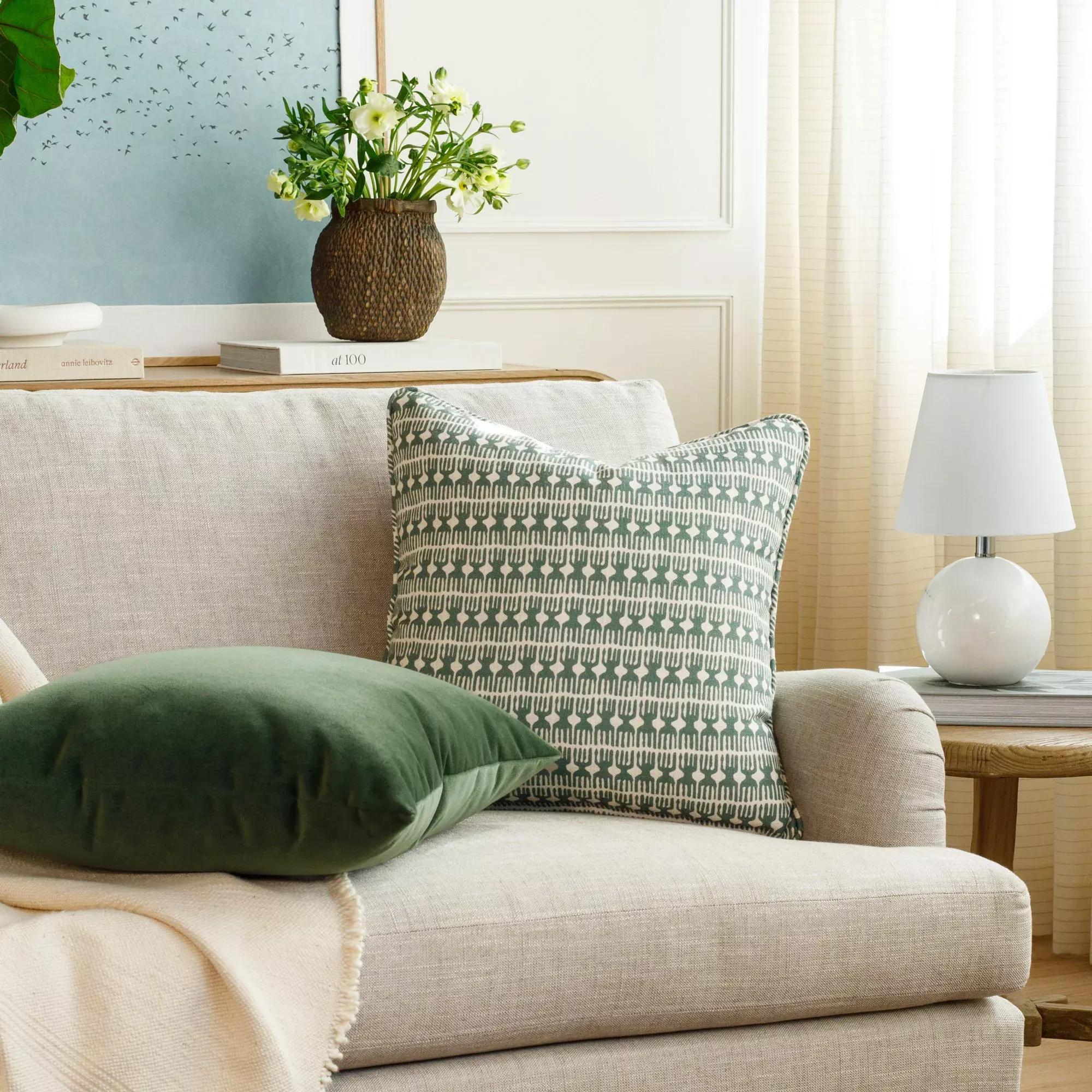
Layer a velvet, a textured linen, and a patterned pillow in a coherent color story — and the sofa reads as styled with intention and confidence.
13. Drape the Chaise With Texture
The chaise section can look underdressed compared to the cushion-heavy main body of the sofa. A chunky knit or woven throw placed casually there adds the visual weight and warmth the chaise needs.
14. Use the Sectional’s Corner for a Statement Light
That interior corner of the sectional — where the two sections join — is the ideal spot for an arc lamp or tall sculptural fixture.
It adds vertical presence, bathes the seating area in warm ambient light, and frames the composition from above.
15. Hang Art at Eye Level Above the Sofa
Six to eight inches above the back of the sectional is where art should live. Anything higher disconnects from the furniture and divides the room visually.
When art and furniture feel connected, the room reads as one unified, deliberate design.
Fabric and Color Decisions Built to Last
16. Don’t Be Afraid of a Bold-Colored Sectional
A deep jewel tone — emerald, sapphire, or aubergine — turns the sectional from a background element into the room’s defining statement.
Neutral walls and warm brass or gold accents alongside it produce a result that reads rich, layered, and confidently designed.
17. Always Lead With Performance Fabric
Unexciting advice that protects you from expensive regret.
Performance fabrics like Crypton and Sunbrella are visually indistinguishable from standard options. The difference is that they’re made to handle real life without showing it.
18. Cream Sectional Plus Dark Cushions: a Reliable Formula
A pale sectional is entirely viable in an active home — especially with performance fabric — when you anchor it with bold, contrasting throw cushions.
Ivory sofa plus charcoal or navy pillows is a combination that reads as modern, considered, and graphic.
19. Slipcovers Make Seasonal Refresh Effortless
A slipcovered sectional allows you to completely shift the room’s mood with the seasons. Light and fresh for summer. Rich and cozy for winter.
Multiple looks from a single investment. An exceptionally practical form of design flexibility.
Room Configurations That Serve Real Life
20. A Chair at the Open End Completes the Group
A statement chair placed at the open end of an L-shaped sectional closes the seating into a complete conversational U.
All seats face each other. No one is angled away. The conversation becomes easy and inclusive.
21. An Ottoman Outperforms More Sofa
Rather than adding more sectional footage, an ottoman at the open end delivers far more versatility. Footrest, casual extra seat, or — with a tray — an instant serving surface.
22. Console Behind the Sofa, Always
When a sectional floats away from the wall, the space behind it often looks unresolved.
A slim console table gives that space purpose. lamps and a plant on top and the back of your sofa becomes a styled moment rather than a gap.
23. Two Sectional Pieces, Facing Each Other
If the room has generous square footage, two smaller sectional configurations positioned across a central coffee table create a symmetric, balanced layout perfect for entertaining and conversation.
The Finishing Details That Elevate Everything
24. A Round Table Against a Sectional’s Straight Lines
The sectional brings only straight lines and hard angles to a room.
A round or oval coffee table in front counterbalances all that geometry with beautiful contrast. It’s a combination that’s stood the test of time in interior design because it works every time.
25. A Floor Plant Brings Life to the Corner
A fiddle-leaf fig or birds-of-paradise at the end of the sectional introduces organic height, visual softness, and living presence — things that no furniture or accessory achieves in quite the same way.
26. A Picture Ledge Keeps the Wall Art Fresh
Rather than committing to nails and fixed frames, a picture ledge above the sectional lets you rotate and layer art freely.
The wall stays dynamic and expressive without permanent commitment to any single arrangement.
27. Put a Side Table at the Chaise End
A side table at the arm end is expected. A surface at the chaise end is the detail most sectional owners overlook.
A petite round table at that end solves the problem of nowhere to set a drink when you’re actually stretched out — addressing an everyday frustration that most people have simply accepted as part of the deal.
28. Three Levels of Light, Minimum
One floor lamp. One table lamp on the console. A pendant or ceiling ambient above.
Lighting at three distinct heights builds warmth, depth, and atmosphere. A single overhead source — no matter how well chosen — produces a flat, utilitarian result.
Build the lighting in layers and watch the room transform after dark.
29. Anchor the Zone With a Long Bench
In a room with space to spare, a upholstered bench positioned a few feet from the sectional gives the seating arrangement a defined perimeter.
It signals intention, provides practical overflow seating for gatherings, and gives the whole setup a satisfying sense of completion.
You’re Ready
You’ve just covered the full spectrum — from the big structural decisions about placement and proportion to the small styling details that separate a room that merely functions from one that genuinely impresses.
Save this page. Come back to it when you need it.
The next time that nagging feeling returns in your living room, you’ll have both the diagnosis and the prescription for what’s not working and how to fix it.
What closes the gap between the rooms you love and the room you live in isn’t spending more.
It’s deciding better.
You now have everything you need to do exactly that.