
Disclosure : This post may contain affiliate links or paid partnerships. I may earn compensation if you click a link or make a purchase, at no additional cost to you. See my disclosure for more info.
Texture changes everything.
Not color. Not pattern. Not even the perfect piece of furniture. The quality of surfaces in a room — how they interact with light, how they feel underhand, how they speak to each other — is what determines whether a room feels alive or merely assembled.
Bohemian design is, at its core, a textile art form. It layers organic materials, natural fibers, and handmade objects into spaces that feel genuinely inhabited rather than just decorated. These thirty-five ideas will teach you to think in texture — and to build a room that resonates long after you leave it.
The Soul Behind Bohemian Design — And Why It’s Harder Than It Looks
Bohemian design looks effortless. Collected. Unforced. Like someone with exceptional taste simply lived in a space long enough for it to absorb their personality.
That quality — that sense of accumulated character — is what makes it so compelling. And so hard to shortcut. Because when people try to rush the process, the result reads immediately. A macramé wall hanging nailed to a bare white wall. A few throw pillows that don’t quite cohere. Plants that look placed rather than grown. The elements are there. The essence is not.
The essence comes from understanding how the elements relate to each other — how texture, tone, scale, and source interact to create a room that breathes.
Building Your Bohemian Space From the Ground Up
Texture needs a foundation to play against. A surface that’s already busy gives texture nowhere to register. Neutralize first. Layer after.
1. Walls in quiet, warm tones. Warm white, cream, muted ivory. These surfaces don’t fight — they receive. Every textural element you add becomes more visible and more intentional against a calm backdrop.
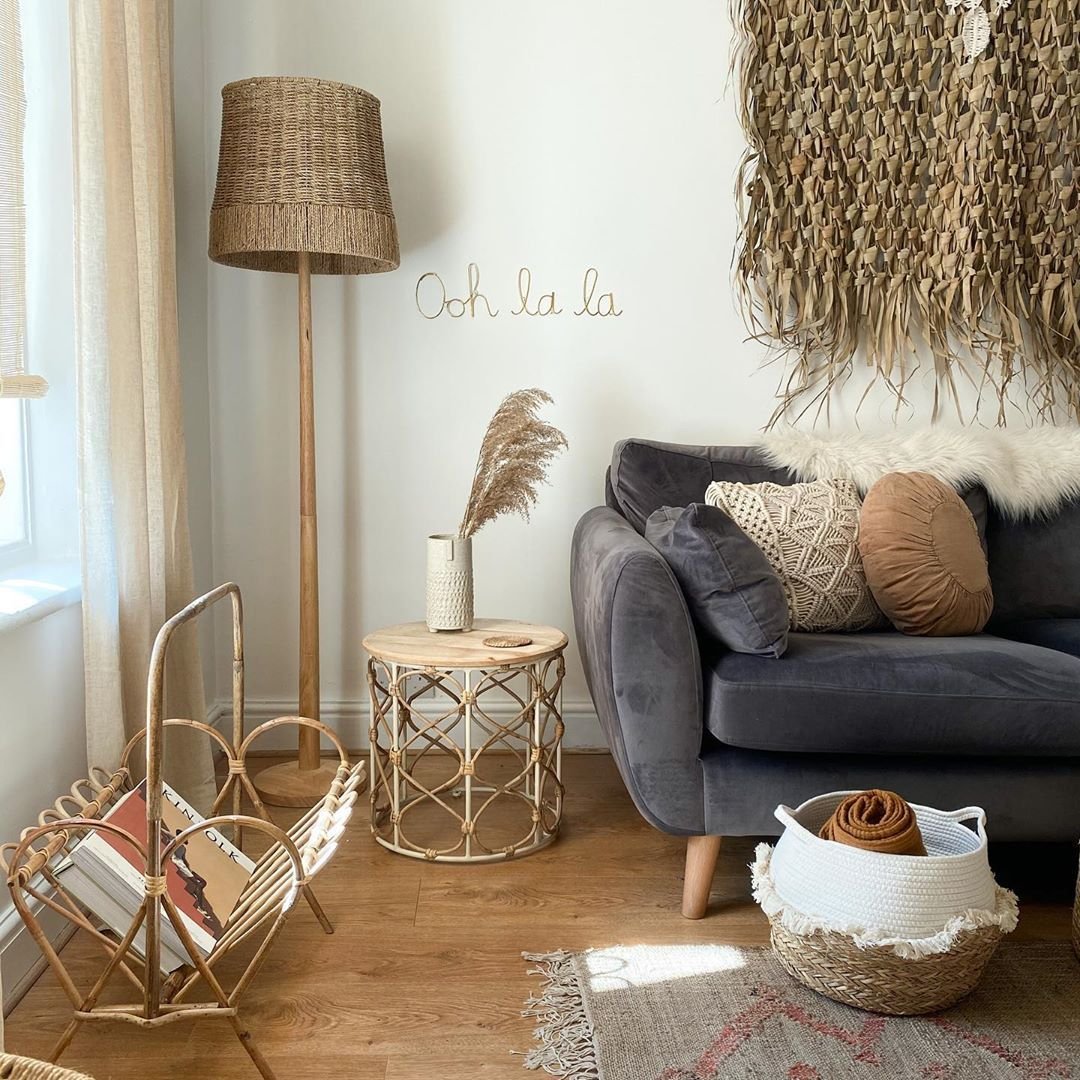
2. A sofa with relaxed proportions and a fabric that invites touch. Deep-cushioned, low-armed, with a seat that actually absorbs you when you sit in it. A linen-covered sofa in oatmeal or cream is the essential starting material for this kind of room.
3. Natural material underfoot. Raw wood, stone, or a large natural-fiber rug in jute or seagrass. Organic floor material is the base layer of the room’s entire texture story.
From these three decisions, a room can become anything. Without them, layering produces noise rather than depth.
Textile Layering: The Craft That Defines Bohemian Interiors
If bohemian design is a language, textiles are its vocabulary.
Every woven, knitted, printed, or embroidered surface adds a word to the room’s conversation. The goal is to fill that conversation with meaning — not filler. And the craft of layering textiles is the skill that separates rooms that feel extraordinary from rooms that merely look nice.
4. Layer two rugs with different textures and scales. A low-pile natural fiber as the base — jute, sisal, dhurrie — and a vintage Persian or kilim rug on top. The interaction between flat texture and patterned pile creates visual and tactile depth that single rugs simply cannot achieve.
5. Treat the sofa surface as a textile composition. Lumbar pillows at the back, oversized square pillows in front, round bolsters at either end. The most effective combinations mix at least three distinct fabric types — velvet, linen, embroidered cotton, or mudcloth.
6. Leave a Turkish towel or woven throw draped without symmetry. Not arranged. Not folded. Just draped, as though you just used it and left it there. That’s the look. That’s the entire point.
7. Hang a textile on the wall as a primary art piece. A handwoven tapestry, a block-print panel, a vintage ikat. The tactile presence of fabric on a hard wall changes both the acoustic and visual quality of the entire room.
Color as a Tool: Building a Palette With Intention and Depth
Color in bohemian rooms is not decoration. It’s architecture.
A palette that’s too broad fractures the room. One that’s too narrow flattens it. The goal is a range of three to four tones that share a temperature, complement each other across different materials and textures, and give the room a clear visual identity.
8. The organic warm palette. Terracotta, ochre, raw linen, and dusty blush. A palette rooted in earth and clay, with the quality of unfinished, handmade things left to age beautifully.
9. The coastal artisan palette. Indigo, raw white, bleached wood, and antique brass. Quieter and more architectural, but unmistakably bohemian in its material language and warmth.
10. The forest jewel palette. Deep olive, rust, dark mustard, and warm black. Rich and complex, but never heavy when all tones stay firmly within the warm register.
Build the palette before you build the room. Everything else becomes easier once the colors are settled.
Greenery as a Design Element: Plants That Anchor and Elevate
Plants are not accessories. In a textural room, they are as structural as a piece of furniture.
They add vertical rhythm, organic form, and — uniquely among all the elements in the room — continuous, visible change over time. A room with well-tended plants is a room that’s alive in a way no object collection can match.
11. Anchor the room’s vertical center with one large plant. A monstera, a fiddle leaf fig, or a tall philodendron in a corner that currently does nothing for the space. Large plants carry scale the way no small grouping ever replicates.
12. Vary plant heights deliberately and with purpose. One at floor level, one at shelf height, one trailing from above. The graduated heights draw the eye through the room in a way that a uniform-height arrangement never achieves.
13. House your plants in woven baskets as planters. The weave of a seagrass or rattan basket adds a second layer of texture that plastic and ceramic pots eliminate entirely. Slip the nursery pot inside and the transformation is complete.
14. Hang a trailing plant in a macramé hanger. The fiber of the hanger and the leaf of the plant are in visual dialogue — both organic, both handmade, both contributing to the room’s larger textile story.
Crafting Warm, Layered Light for a Bohemian Living Room
Light reveals texture. Good light shows every weave, every grain, every fiber in its best aspect. Bad light flattens them all.
This is why lighting is not a secondary consideration in a textural room — it is primary. The quality of light you choose determines how much of your decorating effort the room actually communicates.
15. Fit a pendant that contributes texture as well as light. A rattan pendant light or a woven chandelier adds handmade material overhead and casts warm patterned shadows across the ceiling that no flat fixture creates.
16. Layer floor lamps with warm bulbs at multiple positions throughout the room. Two or three floor lamps at different heights create layered warmth. Bulbs below 2700K are mandatory — cool light kills the warmth that organic materials work hard to create.
17. Place candles in brass or ceramic holders across every viable surface. The warmth of real flame on natural surfaces — linen, wood, rattan — is irreplaceable. It’s the final sensory layer that completes the room.
18. Use string lights sparingly and specifically. Inside a glass vessel or along a low shelf. Not as a primary overhead source — they create flatness where you need warmth and dimension.
Furniture With Story: How to Mix Pieces That Feel Collected Over Time
A room furnished in a single session never quite convinces. The pieces all have the same newness, the same decision date, the same curatorial logic. What’s missing is the sense of genuine accumulation — of a room that grew alongside the life lived inside it.
19. Mix wood species and finishes as a deliberate design choice. Oak, teak, walnut, mango wood — different tones and grains, all warm-based. The variation adds the sense of time that matching sets fundamentally lack.
20. Bring in a piece of rattan or cane furniture. A lounge chair, a console table, a side table. Rattan is the material most native to bohemian design — lightweight, beautifully textural, and more elegant with age than almost any other material.
21. Source a vintage trunk or chest as a coffee table. The worn surface, the aged hardware, the imperfect edges — all of these add the character that new furniture must work much harder to simulate, and often fails to achieve.
22. Add floor-level seating. A large floor cushion, a low meditation stool, a stack of flat cushions. The invitation to sit low changes how the room is used — and how it feels to anyone inside it.
Telling Your Visual Story Through Thoughtful Wall Styling
What goes on your walls says as much about you as anything else in the room. In a bohemian home, the walls contribute to the room’s ongoing conversation rather than simply framing it.
23. Build a gallery wall from genuine pieces that mix materials and meanings. Combine frames in wood, rattan, and metal. Include personal photographs, pressed botanicals, a small textile, and a mirror. Five to nine pieces in an organic, asymmetric arrangement that feels grown, not placed.
24. Hang a large round mirror with a rattan or bamboo frame. The round form is a design choice in itself — it echoes the organic shapes of plants and woven materials throughout the room. It also opens the room by reflecting its contents back with warmth.
25. Style floating shelves with three things: a ceramic vase, a plant, and open space. The space is not a failure. It’s what makes the vase and the plant worth seeing.
Artful Finishing Touches That Give a Room Its Personality
The first ninety percent of decorating is furniture, textiles, and plants. The final ten percent is what makes people remember the room long after they’ve left it.
26. A Moroccan pouf placed with purpose. It’s useful, it’s textured, and it completes any sitting arrangement with a naturalness that suggests it was always meant to be there. Leather or embroidered fabric both work beautifully.
27. Books as objects with visual and intellectual weight. Stacked horizontally on the coffee table, face-out on the shelves. Art, travel, design, architecture. The subjects you choose telegraph something real about who you actually are.
28. A brass tray as an organizing object and visual anchor. Group a candle, a small ceramic, a stone, a single bloom inside it. A tray gives disparate objects a shared visual field and transforms any surface from scattered to styled.
29. Scent as a sensory signal. A diffuser with earthy scents — oud, amber, or sandalwood — provides the olfactory layer that completes the room’s total sensory experience. A room that smells right feels right before you’ve consciously evaluated a single visual element.
30. A sheepskin throw draped over a chair or sofa arm. The soft, dense texture of sheepskin against linen or rattan is one of those material contrasts that makes both materials look better and more intentional.
The Styling Mistakes That Strip a Room of Its Bohemian Character
Texture and warmth can be undermined just as surely as they can be built. Here’s how it happens — and how to prevent it before it costs you the room.
31. Forcing the theme defeats the purpose entirely. When every element is maximally bohemian, the room becomes a parody rather than a portrait. Leave room for some pieces to simply be beautiful, without an agenda attached.
32. Ignoring scale is the most common structural error in any style. A rug too small for the room, a plant too large for the corner, a lamp too short for its purpose. Get scale right before anything else.
33. Eliminating negative space removes the room’s ability to breathe. Surfaces and walls need open areas. They’re the silence that makes the composition readable and restful for the eye.
34. Rushing the process produces rooms that feel manufactured. The collecting nature of bohemian design takes time by definition. One piece per month beats ten pieces in a single weekend every time.
35. Losing yourself in reference images. Inspiration is a starting point, not a destination. The room must ultimately feel like you — your materials, your experiences, your developing eye.
Your Living Room Is Ready to Become Something Worth Staying In
You’ve been looking at other people’s rooms for long enough.
You understand now what they share — the neutral foundation, the layered textiles, the warm light, the plant life, the collected furniture, the small sensory details that make a room feel like someone actually inhabits it with joy.
You know what to do. Start today. Not with a complete overhaul — with one decision. One element that moves the room toward the texture and warmth you’re looking for.
Bohemian rooms don’t reveal themselves all at once. They emerge over time, each addition making sense of the last. By the end of that process, you won’t have a room that looks bohemian. You’ll have a room that is — because it was built from your choices, your objects, your patience.
🔍 Focus Keyphrase: bohemian living room designs
📌 SEO Title (< 60 chars): 35 Bohemian Living Room Designs That Feel Like a Getaway
🔗 Slug (< 60 chars): bohemian-living-room-designs
📝 Meta Description (< 155 chars): Discover 35 bohemian living room designs that are chic, cozy, and effortlessly styled. Get practical tips to transform your space into a boho getaway today.