
Disclosure : This post may contain affiliate links or paid partnerships. I may earn compensation if you click a link or make a purchase, at no additional cost to you. See my disclosure for more info.
Building a home sauna is simpler than most people expect. The complexity comes from information overload, not from the work itself.
This guide strips away the noise. Eleven decisions, in sequence, with nothing extra. Follow them in order and you’ll have a sauna that performs from day one.
The Single Reason Most Home Sauna Projects Stall
People approach this out of sequence. They research backrest options and browse accessory kits before they’ve answered the questions that shape the actual build. Settle the foundational decisions first. Every downstream choice becomes straightforward once the foundation is set.
1. Choose Your Location
Nothing can be finalized until the location is confirmed. The space must have: a floor drain or drainage route, electrical panel access, and moisture-tolerant flooring. Tile, concrete, and rigid vinyl all qualify. Carpet does not.
Good candidates: a basement room, a garage corner, a shed or outbuilding, or a large closet for a compact single-person infrared unit. Include the cool-down path in your planning — access to a shower or exterior door makes a meaningful difference. Keep ceiling height at or below 7 feet. Heat rises; extra ceiling height is wasted energy.
2. Choose Your Heat Type
This decision shapes every other choice in the build. Make it first.
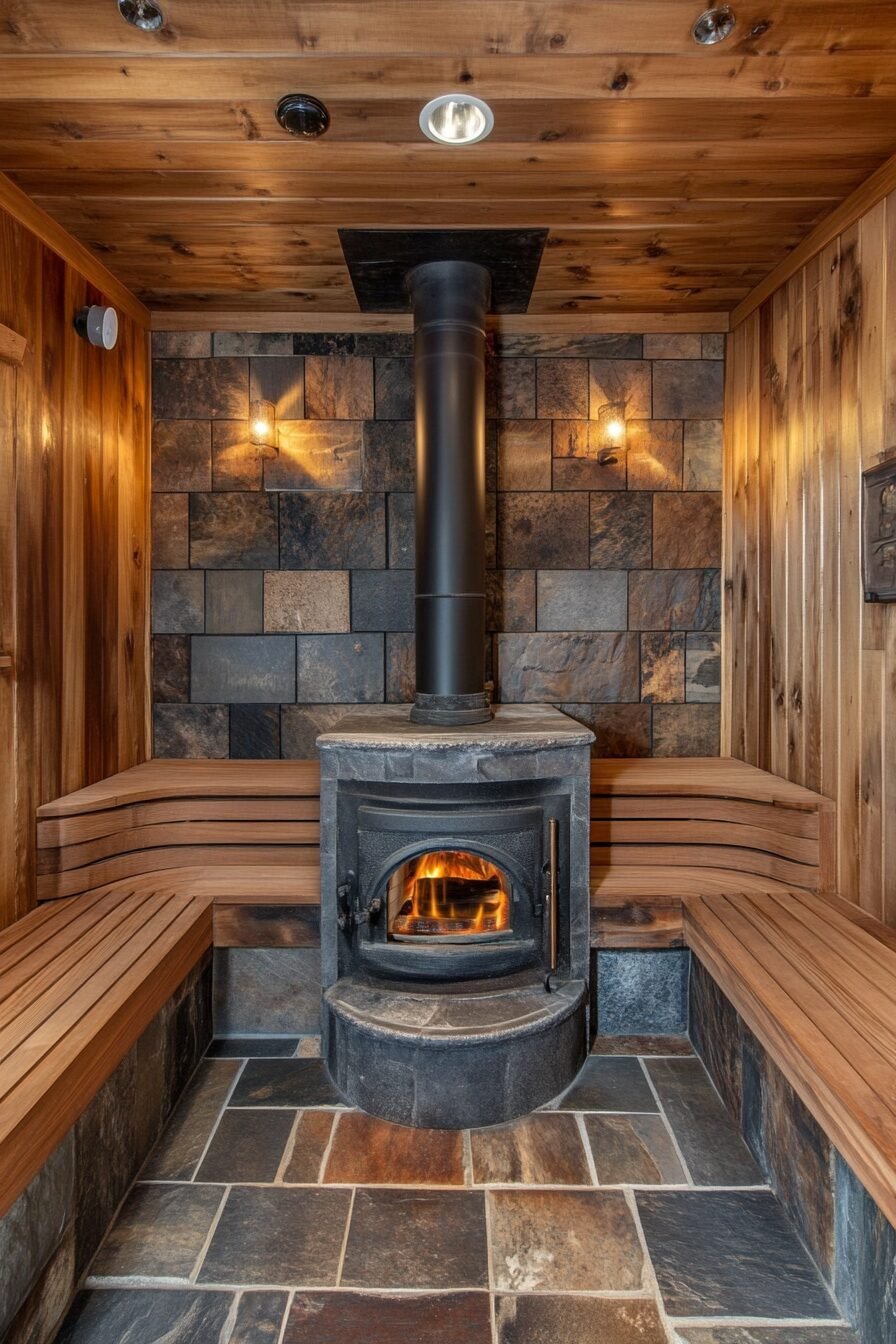
Traditional: A stone heater generates intense heat. Water on the stones produces steam. Temperatures: 150°F to 195°F. Requires a 240V dedicated circuit. More involved to install. Infrared: Panels heat the body directly. Temperatures: 120°F to 150°F. Lower energy draw. A good 2-person infrared sauna runs on a standard 120V outlet. Much simpler to install. Your choice determines your lumber list, electrical requirements, insulation approach, and ventilation layout.
3. Size the Room Correctly
Smaller is better. Oversized rooms take longer to heat, strain the heater, and cost more to run. Size targets: one person — 3’ x 3’ infrared, 4’ x 4’ traditional, or a compact 2-person traditional sauna; two people — 4’ x 6’; family use — 5’ x 7’, where a 4-person cedar indoor sauna fits perfectly.
Calculate your room’s cubic footage. Match it to the heater manufacturer’s rated capacity. An undersized heater will not reach temperature. An oversized one is a safety risk. There is no substitute for this calculation.
4. Select the Right Wood
Western red cedar is the standard: naturally moisture-resistant, thermally stable, comfortable against skin. Reliable alternatives: hemlock (economical, available in tongue-and-groove format), basswood (recommended for scent-sensitive users), and Nordic spruce (the Scandinavian benchmark).
Never use pine (sap bleeds at heat), oak (surface becomes painfully hot), or any pressure-treated lumber (releases toxic compounds when heated). Install paneling horizontally, ¾” to 1” thick. Round all bench edges before installation.
5. Frame and Insulate Properly
Standard 2×4 framing, 16 inches on center. Insulate with fiberglass batt — R-13 in walls, R-22 minimum in the ceiling. The ceiling is the highest-priority surface: heat exits through an under-insulated ceiling faster than anywhere else.
Install an aluminum foil vapor barrier on the interior side of the insulation. It reflects heat back into the room and seals the wall cavity against moisture. No substitutes — only aluminum foil rated for high-heat use. Tape every seam with foil tape. One gap allows moisture to silently destroy the framing behind it.
6. Install the Ventilation System
Required for safety and structural longevity. Two openings: a low intake vent near the heater base (6 inches from the floor) and a high exhaust vent near the ceiling on the opposite wall, with a damper. Each opening is roughly 4” x 6”.
Without adequate ventilation: CO₂ accumulates during sessions, creating a health hazard. Between sessions, trapped moisture prevents drying, which causes mold inside the wall structure. Both consequences are preventable with two correctly placed openings. This step is not optional.
7. Select and Install the Heater
Traditional: An electric heater with integrated controls, sized to your room’s cubic footage. Requires a dedicated 240V circuit at 30 to 60 amps — the Harvia 6kW KIP is a common benchmark for electrical planning. A licensed electrician must complete all high-voltage wiring. This is a legal and safety requirement, not a recommendation.
Infrared: Standard 120V circuit in most cases. No special electrical infrastructure needed. A quality 2-person far infrared cedar sauna plugs in without modification. Significantly simpler installation overall.
8. Hang the Door Correctly
Two rules, no exceptions. Solid construction only — hollow-core doors warp under sustained heat. Outward-opening swing only — if an occupant loses consciousness, an outward-swinging door remains accessible from outside regardless of where the person has fallen.
Tempered glass doors are a practical choice: they admit light and reduce the enclosed feeling in smaller rooms. Hardware: magnetic catch or roller latch only. No locking mechanism of any kind. This rule is absolute.
9. Fit Appropriate Lighting
Standard residential fixtures fail in sauna conditions. Specify vapor-proof, heat-rated fixtures only. Sauna-grade LED strip lighting is an alternative — excellent ambient output, minimal heat. Mount all fixtures below the seated sight line. The room is for rest; overhead brightness works against that purpose.
A compatible dimmer switch allows light level adjustment without any structural modification — worthwhile, low-cost, high-impact upgrade.
10. Add the Finishing Accessories
Benches: L-shaped layout recommended. Upper bench for maximum heat; lower for a milder experience or leg rest. A quality cedar sauna bench is the primary surface in the room — material quality here matters. Backrest: Angled support from bench wood, or a ready-made sauna backrest installed directly.
Steam tools: Wooden bucket and ladle for traditional saunas. Essential for producing löyly. Monitoring: A thermometer and hygrometer at seated head height; a sand timer for session tracking. Floor: Hard surface underneath, removable slatted wood mat on top for comfort and drainage.
11. Cure Before First Use
New wood retains construction moisture. Run the heater to 140°F and hold for one to two hours, opening the door several times. Repeat two to three times before your first real session. The curing process drives out residual moisture and stabilizes the wood’s natural resins.
Expect a pronounced wood aroma during curing, especially with cedar. It fades with each subsequent session. After curing, bring the sauna to operating temperature, add water to the sauna stones if traditional, and take your first session. The build is done. The room is ready.
Eleven Steps. A Few Weekends. Your Own Sauna.
There is nothing complicated about building a home sauna when you follow the steps in the right order. Each decision prepares the next. The materials are available. The techniques are learnable. The result is a room that works exactly as intended, every time you use it.
Location confirmed. Heat type chosen. Start there. Everything else follows.
🔍 Focus Keyphrase: home sauna DIY
📌 SEO Title: Home Sauna DIY: Build One Yourself — Complete Guide
🔗 Slug: home-sauna-diy-build-one-yourself
📝 Meta Description: A clear, no-fluff guide to building your own home sauna. Eleven decisions in order — from location and heat type to insulation, accessories, and first use.