
Disclosure : This post may contain affiliate links or paid partnerships. I may earn compensation if you click a link or make a purchase, at no additional cost to you. See my disclosure for more info.
Your living room is bothering you in that quiet, persistent way.
You can’t always name the problem. It’s livable. It’s tidy. But something about it feels like a placeholder — like the space is waiting to become the room you actually want.
You discovered industrial design, and something about it resonates. Weathered steel, raw concrete, old timber, factory-grade pendant fixtures. The undecorated honesty of it. The sense that materials are allowed to be what they are.
The trouble arrives when you look at real examples. Those rooms are architecturally stunning and emotionally empty. Impressive to photograph. Uncomfortable to inhabit.
“I love the materials. I just can’t imagine living inside it.”
Here’s the thing: the industrial rooms that actually work are built on a quiet secret — warmth was designed in from the start. Not added later as an afterthought, but embedded in the same choices that create the raw, honest character. Softness as a structural material.
You can have the grit without sacrificing the grace. These 39 ideas show you how.
Lighting Approaches That Create Real Warmth
The single-pendant mistake is everywhere in industrial rooms.
One large fixture. Centered. Done. Except the room feels like a stage set under one spotlight.
Good industrial lighting is a thought-out system. Multiple sources, working at different heights and intensities, together.
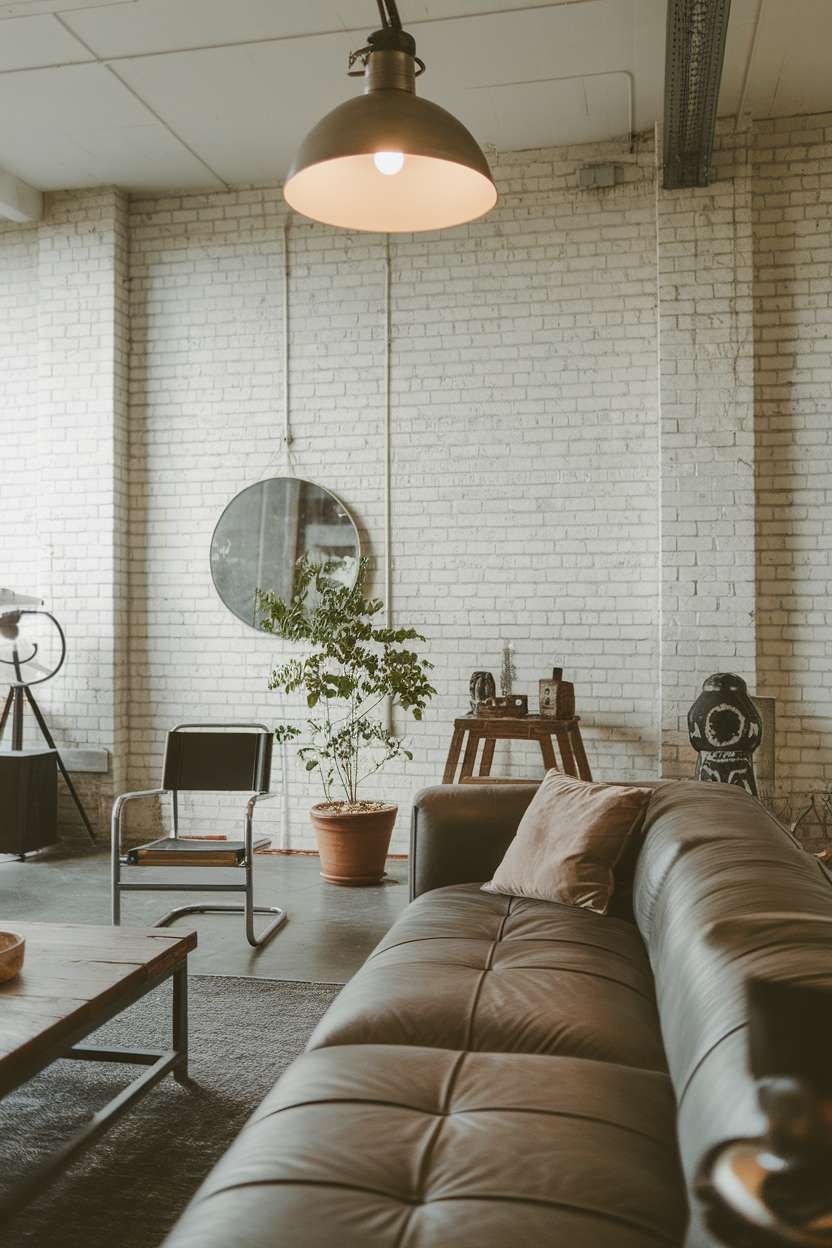
1. Group several pendant fixtures at varying drop heights over the main seating area.
Three to five pendants at different heights builds visual rhythm overhead. Each one doing something slightly different in the room’s composition.
2. Set a matte black task floor lamp beside the sitting area.
Adjustable arm lamps are industrially authentic and practically useful. They look purposeful, which is exactly what industrial design asks of every object in the room.
3. Install brass or aged gold wall sconces flanking the sofa or artwork.
Warm brass against dark metal is a design revelation in industrial rooms. It adds immediate softness without sacrificing any of the material honesty the style is built on.
4. Run genuine filament bulbs across the ceiling on substantial black wire.
Spacing matters. Wire weight matters. When done right, a filament ceiling run is one of the most dramatically effective and cost-efficient industrial lighting choices available.
5. Light a cluster of pillar candles on a flat metal tray on the coffee table.
No electric source replicates what actual flame contributes. Flickering, moving, warming light on a tray beside the sofa — nothing in the lighting aisle competes with it.
Living Things — The Simplest Warmth Strategy
The industrial room is running cold. What’s the fastest fix?
Introduce something alive.
Biological life — or materials derived from it — breaks the hard-surface monotony with a speed and grace that manufactured objects cannot match.
6. Fill an empty vertical corner with a tall specimen plant.
A fiddle leaf fig, monstera, or snake plant in a woven basket does two things at once: fills the dead space and brings biological warmth to the room.
7. Populate a metal shelf with a curated collection of small plants.
Varied species, varied containers, varied heights. The result reads as a living installation — and the contrast of green against raw metal is quietly arresting.
8. Display dried botanicals in a handmade stoneware vessel.
Pampas grass, dried seed pods, cotton branches. All the textural warmth of living plants, none of the upkeep. Choose pieces with architectural presence.
9. Position natural stone objects — a marble serving tray, a geode bookend — as material accents.
Stone introduces weight, density, and natural calm. It slots into the industrial material palette alongside iron and timber without competition or friction.
Getting the Architecture Right From the Start
Architecture shapes the conditions that every subsequent design decision works within. The structure comes first — not last. These foundational choices define the character of the room at its deepest level.
10. Expose the brick on one wall only and let surrounding walls stay neutral.
One brick wall carries the entire industrial story. Flanking it with warm-toned plaster creates contrast that makes the brick more powerful, not less.
11. Seal concrete floors before considering them finished.
Raw concrete reads abandoned. Sealed concrete reads considered. A quality sealer changes the material’s entire emotional register at the cost of a few hours.
12. Install wide-plank reclaimed timber flooring for warmth from the ground up.
Old-growth salvaged wood brings something no other floor covering offers: genuine texture, biological warmth, and the sense that this space carries history.
13. Use oversized black steel-frame windows wherever possible.
Steel-framed glazing is industrial architecture’s most recognizable gift to residential design. Slim dark lines, maximum light, factory-honest aesthetic.
14. Show the structural ceiling beams and stain them in a warm amber or honey.
Exposed beams announce industrial design the moment a visitor looks up. A warm stain converts that announcement from austere to inviting — warmth delivered from overhead.
15. Paint exposed pipes and mechanical runs in flat matte black.
The same pipe can read as neglect or design intent. Matte black paint makes all the difference — claiming the mechanical as graphically intentional.
Furniture That Holds Both Toughness and Comfort
The furniture failure most common to industrial rooms: everything is hard.
Every surface rigid. Every edge sharp. Every piece unforgiving. The room becomes physically and emotionally difficult to inhabit.
The corrective: every rigid material earns a soft companion in close proximity.
16. Anchor with a large leather sofa in a rich, warm brown or tobacco shade.
Full-grain leather on an oversize frame is the single most impactful warmth move in an industrial room. It patinas beautifully and makes everything around it look more intentional.
17. Center the sitting area on a live-edge wood slab coffee table.
Natural timber with an unforced, organic silhouette introduces movement and life into all the angular structure surrounding it. Real wood. Real character.
18. Bring in upholstered accent chairs in a textile that rewards touch.
Boucle, velvet, or heavyweight linen placed across from the sofa. These chairs are the room’s most explicit invitation to stay and settle in.
19. Edit an iron-and-timber open bookcase down to its essentials.
Space between objects, not objects filling every space. A plant, a book, a ceramic piece per section. Restraint reads as confidence.
20. Use a vintage leather trunk with genuine character as an accent side table.
A piece with a real past brings the room’s accumulated narrative to life. Storage is a bonus. The patina is the point.
21. Pull a large chunky woven pouf into the seating area.
Casual. Tactile. Utterly disarming in an industrial room. A pouf signals that this space is for actual human beings, not architectural photography.
Palette Choices That Build Warmth Into the Design
Industrial design is not inherently gray. Gray is a choice. And in most living rooms, it’s not the best one.
“Shouldn’t the palette stay dark and cool to feel industrial?”
Only if the goal is a room that feels like a rainy afternoon inside a shipping container.
Warmth in the color palette is a design decision, not a compromise.
22. Paint walls in warm white rather than any shade of cool or gray-leaning neutral.
A warm-based white holds the room’s light gently throughout the day. Blue-gray walls harden under lower light and make the entire room feel cold even when it isn’t.
23. Bring terracotta, rust, and amber through accessories and textiles repeatedly.
A terracotta-glazed planter, a burnt sienna throw, an amber glass vase. These tones belong in industrial palettes the way raw timber belongs on industrial floors.
24. Use green as a recurring color presence throughout the space.
Plants provide green inherently. Add depth with an olive or sage cushion or muted green throw. Green provides visual relief and prevents the palette from collapsing into darkness.
25. Reserve matte black for accent use — as punctuation, not atmosphere.
Frame edges. Lamp bases. Hardware. A tray or two. Used with precision, matte black defines and grounds. Used everywhere, it deadens. Know the difference.
Detail Choices That Elevate the Room’s Finish
A room that is ninety percent there and a room that is completely there are separated by decisions like these.
Small. Fast. Often overlooked. Impossible to miss once done.
26. Swap out standard switch plates for matte black or aged brass versions.
Ten minutes. Minimal spend. Immediate visible improvement. One of the highest-return upgrades in any room.
27. Shelve books with spines facing the wall.
A calm, tonal line of cream and white paper edges instead of the visual noise of cover art and colored spines. Serene. Intentional. Surprisingly powerful.
28. Arrange a composed vignette on a flat board on the coffee table surface.
One board as a stage. A candle, a small plant, one weighted object placed on top with care. A compact composition that makes the table surface meaningful rather than random.
29. Commit to one matte hardware finish throughout the entire room.
Matte black, brushed brass, or hammered iron. One. Apply it everywhere: frames, lamps, handles, trays. Inconsistency — especially chrome intruding — breaks the visual logic of industrial design at the detail level.
30. Place a vintage or faded rug on top of a large jute base rug for layered depth.
Jute grounds. The vintage piece brings character, warmth, and history on top. The layered combination is consistently richer than a single rug can achieve alone.
31. Protect one genuinely worn piece from the urge to replace or repair it.
Industrial design is honest about time and use. A worn edge, a chipped surface, visible patina. These are not defects to hide. They are the language the style speaks.
Textiles That Bring the Room Back to Human Scale
Picture the room without any fabric at all.
What remains is structurally correct and humanly empty. Not a room — a stage set waiting for actors who never arrive.
Textiles are what signal genuine habitation. Without them, the space is incomplete.
32. Spread an oversized jute or sisal area rug beneath the full seating arrangement.
Larger than feels comfortable. Front legs of every piece sitting on it. A properly sized natural-fiber rug is the warmest foundational layer a room can have.
33. Drape a heavy chunky knit blanket over one sofa arm.
An immediate, effortless warmth signal. It says: sit down, stay, be at ease. No other single object makes that statement more clearly.
34. Layer linen, cotton, and wool cushions in deliberately unmatched earthy tones.
Ochre, slate, rust, cream, sage. Varied sizes and weaves, intentionally mismatched. The cumulative effect should be slow accumulation rather than one-day purchase.
35. Hang floor-to-ceiling linen curtains in a natural, undyed palette.
Even alongside striking industrial windows, linen curtains introduce a layer of softness the architecture alone cannot. Oatmeal or flax linen hanging full-length from ceiling to floor is quietly beautiful.
Using the Walls to Finish the Story
Exposed brick and concrete walls speak for themselves. Standard drywall, left bare, just speaks silence.
36. Hang one large abstract or graphic piece in a minimal industrial frame as the main statement.
Scale it up and commit. One large work over the sofa or on the focal wall, framed in raw metal or stripped timber. Bigger than seems right at first is almost always right in the end.
37. Assemble a gallery wall using frames in deliberately varied materials and sizes.
Iron, natural wood, aged brass — different dimensions, different orientations. The wall should read as an accumulated personal archive, not a purchased decoration package.
38. Hang a large forged-metal mirror or a mechanical gear clock as a centerpiece object.
A large mirror in a metal frame adds perceived space and light. An exposed-movement clock earns its wall space by functioning as both timepiece and sculpture.
39. Lean art on a shelf or ledge rather than mounting everything to the wall.
Propped pieces suggest the room is still evolving — shaped by whoever lives in it, not installed by a decorator. For industrial design, that’s exactly the right message.
A Room That Finally Feels Like Yours
You’ve been building toward this for a while. Some pieces in place. The direction clear. The full picture still just out of reach.
What’s been missing isn’t more things — it’s the understanding that an industrial room’s warmth is built through contrast, not addition. Soft answers hard. Warm neutralizes cool. Organic interrupts geometric. The tension between those pairs is what gives the room its life.
You don’t need all 39 ideas. Find the handful that fit your room and your life. Start with the one that feels most urgent. Add the next when the moment arrives.
At some point you’ll walk in and it will feel completely right. Not almost. Completely.
Pick one idea from this list. Start this weekend.
Your room has been waiting long enough.
🔍 Focus Keyphrase: industrial living room ideas
📌 SEO Title: 39 Industrial Living Room Ideas That Feel Like Home
🔗 Slug: industrial-living-room-ideas
📝 Meta Description: Discover 39 industrial living room ideas that balance raw style with real warmth. From lighting layers to textiles — make the look truly livable.