
Disclosure : This post may contain affiliate links or paid partnerships. I may earn compensation if you click a link or make a purchase, at no additional cost to you. See my disclosure for more info.
Consider this your summer design brief.
Not a mood board. Not a vague list of seasonal suggestions. A clear, prioritized set of 29 decisions that will move your home from seasonally neutral to genuinely, unmistakably designed.
These are the moves that produce results. Not the ones that fill a room — the ones that fundamentally transform how it feels to be in it.
The brief is ready. Let’s work through it.
A Design Philosophy: Summer Decor Is About Restraint, Not Accumulation
The dominant approach to seasonal decorating — acquire new objects, apply a theme, replace the props — produces spaces that feel decorated rather than designed. There is a meaningful difference between the two.
A decorated room shows you what its owner purchased. A designed room makes you feel something. The objects are secondary to the spatial quality they collectively create: the quality of light, the visual weight of surfaces, the emotional register of material and color in combination.
Restraint, selection, and editing produce better results than accumulation. This brief is built on that principle. Every decision here serves atmosphere before appearance.
Establishing the Base: Lightness as a Structural Choice
1. Specify Sheer linen as the primary window treatment.
Light quality is a structural decision, not a decorative one. Heavy window treatments create a characteristic darkness and enclosure that no amount of supplementary decorating can fully offset. Sheer linen panels allow diffuse, warm light to move through a space — establishing the foundational atmospheric quality from which all subsequent decisions should build.
2. Specify a natural jute or sisal rug or bare floor as the summer floor treatment.
The floor covering decision in summer is a decision about visual weight. Dark or heavy rugs increase it significantly. Natural fiber flooring maintains warmth while reducing visual mass. Bare hardwood or stone offers the most open, contemporary result. The choice should be driven by what the specific room needs, not by seasonal habit.
3. Brief throw pillow covers in a lighter summer palette.
The palette brief for summer cushion covers: whites, warm creams, desaturated sage greens, midtone terracottas, or sand. The objective is to raise the room’s visual temperature toward lightness. The change is achievable in under ten minutes at minimal cost.
4. Apply a rigorous surface editing pass throughout the home.
The design principle at work here is negative space — the contribution of what is absent. Surfaces occupied entirely by objects produce a visual noise that prevents any individual piece from reading clearly. Remove one-third of what currently occupies every surface. Evaluate what remains against two criteria: quality and necessity. The edit consistently outperforms the acquisition.
The Natural Element: Bringing Botanical Life Into the Room
5. Select one statement branch for a ceramic floor vase — prioritize scale over variety.
In botanical decoration, scale and restraint outperform variety every time. One well-chosen branch — eucalyptus, olive, or dried palm — placed in a tall ceramic floor vase occupies a corner with architectural authority. It requires minimal maintenance and produces a result that most complex arrangements consistently fail to match.
6. Specify a functional herb arrangement on the kitchen counter.
Functional objects that are simultaneously beautiful represent the highest category of design decision. Fresh basil, rosemary, and mint deliver fragrance, color, texture, and genuine culinary utility together. They replace the purely decorative function of artificial plants with something categorically superior.
7. Apply a handwoven seagrass basket as the specified planter cover throughout.
Material substitution is among design’s most effective tools when applied correctly. The visual quality of a handwoven seagrass basket is categorically different from that of a plastic nursery pot. This substitution requires no new plant purchase — only a different container. The result reads as a deliberate, considered material decision.
8. Introduce a dwarf citrus specimen beside the primary light source.
A small lemon or kumquat tree functions as both decorative object and living botanical element — bringing fragrance, color, seasonal resonance, and living presence to a corner that would otherwise hold only static objects. It is among the few acquisitions that improves across all sensory registers simultaneously.
The Olfactory Layer: Scent as an Interior Design Specification
9. Brief the candle selection toward botanical summer fragrance profiles.
Scent establishes atmospheric register in ways that purely visual elements cannot directly access. Winter fragrance profiles — warm spice, amber, sandalwood — create psychological associations of enclosure and heaviness that persist independently of visual changes. Transitioning the candle brief to sea salt, fig leaf, white tea, or lemongrass resets this register toward open and light.
10. Implement a stovetop aromatic protocol for high-impact occasions.
Lemon rounds, fresh rosemary, a drop of vanilla — simmered in water on the lowest heat setting. This produces a diffuse, layered fragrance with immediate and significant atmospheric impact. Guests reliably notice and ask about it. Cost is negligible. Setup time is under five minutes.
Tablescaping for Summer: The Edited Table Brief
11. Specify Linen ones as the table’s foundational layer.
Linen ones is the correct material specification for a summer table — natural, warm, tactile, and categorically distinct from synthetic or utilitarian alternatives. The visual and tactile quality it introduces changes the table’s register from functional to intentionally curated.
12. Specify a ceramic pitcher with loose florals as the centerpiece solution.
The ceramic pitcher as a vessel for casual florals — garden stems, wildflowers, market bunches — is a classic but consistently effective centerpiece decision. It combines the organic and the crafted, the arranged and the accidental. The result is invariably appropriate for summer entertaining.
13. Move the primary dishware to an open-display specification.
Closed-cabinet storage removes objects from visual contribution. A white stoneware dinnerware set on open shelves contributes color, texture, repetition of form, and the implicit statement that meals in this home are valued. Open storage converts everyday objects into a curated display without requiring new acquisitions.
The Bedroom Capsule: The Boutique Hotel Specification
14. Brief the bed in all-white or soft neutral for the season.
The boutique hotel bedroom aesthetic — the one that communicates quality and calm to every guest — is built almost entirely on white linen. Crisp sheets, a lightweight linen duvet cover, and two well-placed pillows. The specification is simple. The result is reliable. It is the most effective single upgrade available to the summer bedroom.
15. Replace the heavy coverlet with a folded cotton throw.
The weighted bedspread is the visual equivalent of a heavy curtain: it increases mass and reduces lightness in a room that summer demands to be light. A loosely folded cotton throw in an oatmeal or blush tone performs the necessary softening function at a fraction of the physical and visual weight.
16. Introduce a rattan nightstand or natural cane accent into the bedroom brief.
Natural materials — rattan, cane, wicker — carry an inherent textural quality and warmth-to-weight ratio that makes them particularly suited to summer bedroom specifications. A nightstand, headboard, or woven accessory piece introduces this quality without adding visual burden to the space.
17. Specify one large abstract print as the primary bedroom wall treatment above the bed.
The gallery wall adds visual complexity. The summer bedroom brief calls for its opposite: simplicity. One large piece in a muted, quiet palette above the headboard produces more authority and more genuine calm than the accumulated visual energy of multiple smaller pieces.
Threshold Design: The Entry as the Home’s Opening Statement
18. Specify a round one as the entryway’s primary focal element.
The round mirror in a narrow entry passage is a precision design instrument. It reflects light, softens linear corridor geometry, and creates a sense of spatial generosity that is otherwise difficult to produce in compressed entry spaces. As the first object encountered upon entry, it establishes the design register immediately.
19. Install a woven bench as the entry’s functional anchor piece.
The entryway bench resolves a practical requirement while simultaneously communicating design intention. A well-specified woven piece in rattan or cane connects the entry to the broader summer material language of the home and signals that the space was designed from its threshold outward.
20. Designate a ceramic bowl as the daily-essentials landing specification.
Entropy at the entry point — scattered keys, misplaced objects, accumulated daily clutter — is a design failure with compounding visual consequences throughout the home. A ceramic bowl, positioned deliberately on the entry surface, absorbs this entropy and preserves the composed quality of the space beyond it.
The Indoor-Outdoor Brief: Dissolving the Seasonal Boundary
21. Establish a dedicated light-side seating vignette within the primary living area.
A vignette — a composed group of elements that creates a visual destination within a room — is one of interior design’s most reliable tools. One armchair, one side table, one small stack of books, positioned beside the room’s best natural light source. Intentional, functional, and seasonally resonant.
22. Specify string lights as the primary outdoor lighting treatment.
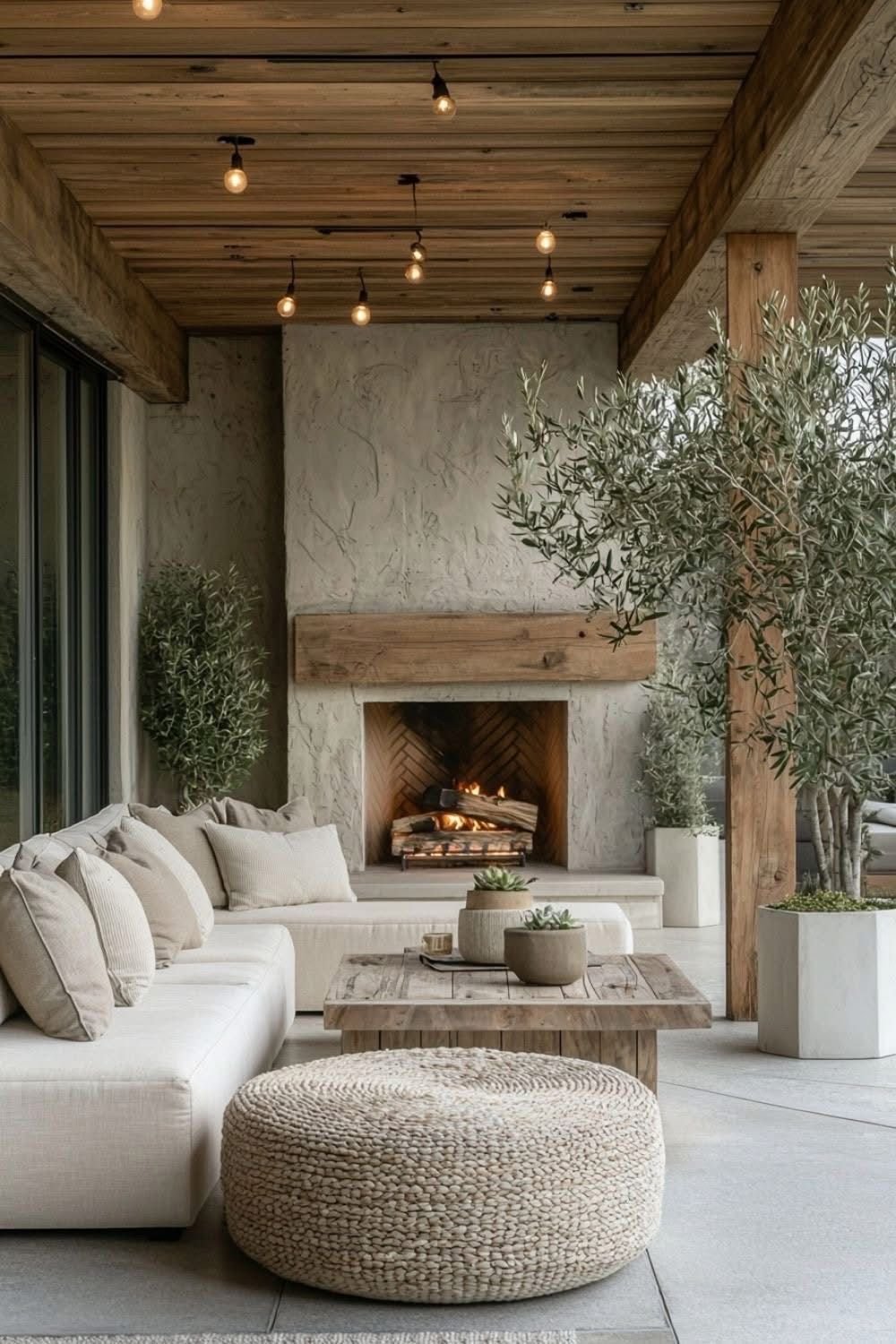
Overhead warm globe lighting is the single most effective outdoor design decision for summer evenings. It establishes a warm color temperature, defines the vertical boundaries of the outdoor space, and transforms a daytime seating area into an evening room. The transformation is complete and immediate after dark.
23. Lay an outdoor rug to define and contain the outdoor seating zone.
The outdoor rug performs the same spatial function as its indoor counterpart: it creates a defined, inhabited area from an otherwise undifferentiated surface. A flat-weave rug in neutral tones achieves this practically and with a visual quality appropriate to the broader summer design brief.
Curated Details: Where Design Expertise Is Demonstrated
24. Update cabinet and drawer hardware to a contemporary finish specification.
Hardware specification is a detail-level decision with a room-level impact. The finish character — matte black, brushed nickel — contributes to the material language of the entire kitchen or bathroom. Changing it requires thirty minutes and a screwdriver, yet the result reads as a comprehensive and considered room-level decision.
25. Compose a coffee table book grouping as a specified surface arrangement.
Three to four books on travel, architecture, gardens, or craft — stacked flat with a single object placed on top. This is a classic editorial styling technique that creates a composed surface arrangement signaling both taste and an invitation to engage. Simple, consistent, and reliably effective.
26. Specify a cluster of Woven wall baskets for underused wall surfaces.
A grouping of three natural seagrass or rattan wall baskets adds texture, organic form, and material warmth to wall surfaces that otherwise remain visually inert. The treatment works across room types and the cost-to-visual-impact ratio is consistently strong.
27. Introduce a single chromatic accent piece via colored glass.
A cobalt blue drinking glass. An amber vessel. A green bottle at the window. In an otherwise neutral interior, one object with color and translucency operates as a controlled accent — drawing the eye, activating the light, and adding vitality without compromising the room’s overall restraint. The discipline is one piece, precisely placed.
Editing Out the Errors: The Two Specifications to Actively Avoid
28. Brief for mood, not for theme — the critical distinction.
The theme-based approach to seasonal decorating produces a specific and consistently recognizable result: a space that communicates its concept too literally. Nautical hardware. Tropical prints. Anchor motifs applied to every surface. These are interiors that show their references rather than demonstrate their quality.
The better brief produces spaces with a consistent mood — lightness, natural material, restrained curation — without announcing a single design influence. Cohesion without costume. Belonging without matching. That is the actual target.
29. Specify lighting before any other design decision is finalized.
Light quality determines whether all other design decisions read correctly or not. Overhead fluorescent or cold-toned lighting suppresses color, flattens texture, and creates an institutional register that no choice of furniture, textile, or object can fully counteract.
Warm-toned bulbs, a strategically placed table lamp, and candlelight after dark establish the environmental conditions under which summer decor can actually be perceived as intended. The brief that addresses lighting last addresses it too late. Specify it first.
Your Design Brief Is Complete — Now Execute It
Twenty-nine decisions. Each specific. Each building toward the same outcome: a home that reads and feels like a summer retreat rather than a house in August.
The brief does not require executing all twenty-nine simultaneously. It requires identifying the five or six decisions that represent the highest-priority improvements for your specific space — and executing those with genuine care and intention.
Quality of execution matters more than completeness of coverage. One decision made well changes a room. Five decisions made well change a home. The season is your deadline.